
Future-Proofing Your Investment: Designing Structures That Withstand Change and Time
Sustainability isn’t just about using green materials; it’s about creating structures that are resilient to environmental threats and adaptable to changing needs. A building that must be demolished or undergo massive, costly renovations every decade is fundamentally unsustainable.
Pre-Engineered Building (PEB) construction, with its clear-span frames and modularity, provides an unparalleled foundation for both resilience and future adaptability, making it the smartest choice for long-term investments.
💨 Enhanced Resilience: Withstanding Environmental Challenges
In an era of increasing climate volatility, a building’s ability to resist extreme weather events is paramount. Steel PEB systems are engineered for superior resilience:
- High Seismic Resistance: Steel is inherently a ductile material. Unlike brittle materials, the flexibility of a well-designed steel frame allows it to absorb and dissipate seismic energy, offering greater resistance to earthquakes.
- Superior Wind Resistance: PEB structures are designed and manufactured to withstand precise wind load specifications for their location, resulting in high shear strength and stability crucial for protection against hurricanes and powerful storms.
- Fire Safety: While steel is not immune to fire, it is non-combustible. Specialized fire-resistant coatings and engineering details ensure the structure maintains integrity, often surpassing the performance of wood-framed structures.
Choosing PEB provides a robust shield against major damage, protecting both the financial investment and the continuity of the business operations housed within.
🏗️ Built for Change: Adaptability and Flexibility
The business world is constantly evolving, requiring facilities to expand, reorganize, or even change their core function. PEB structures are uniquely suited to handle this evolution:
- Easy Expansion: The core design principle of PEB allows for straightforward expansion. Future bays, additions, or even changes in height can be planned into the initial design phase. Adding length to a PEB is often as simple as unbolting the endwall and attaching new primary and secondary framing components—a process that is faster and far less destructive than modifying a conventional structure.
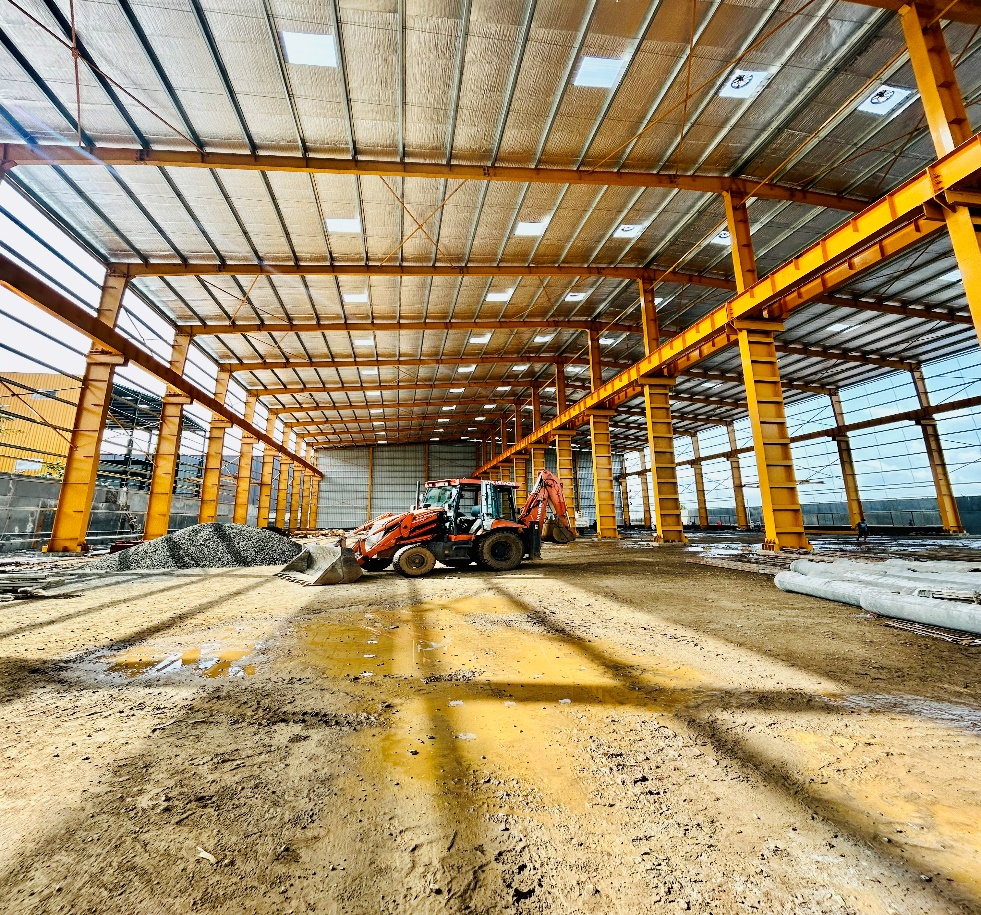
- Clear Span Interiors: One of the greatest assets of steel PEB is the ability to create vast, column-free interior spaces (clear spans). This inherent openness allows owners complete freedom to reconfigure internal layouts, partition walls, and mechanical systems without structural impediments.
- Vertical Integration: The structure is engineered to easily handle the addition of mezzanines, cranes, and specialized equipment loads later in its life, enabling quick and cost-effective changes in internal process flow or storage capacity.
🔄 The Ultimate in Adaptability: Design for Disassembly (DfD)
For a truly sustainable and future-proof investment, a building must not be seen as permanent but as a valuable, reusable asset.
- Relocation Potential: In the context of the circular economy, the bolt-together nature of PEB makes it possible to completely disassemble the structure and move it to a different location. This is an unparalleled advantage for businesses with evolving land needs or for projects in remote or temporary sites.
- Material Recovery: If the structure is no longer needed, its standardized components make material recovery simple and efficient, ensuring the high-value steel can be reused or recycled with minimal processing energy.
The Resilient Conclusion
By combining exceptional resistance to environmental forces with inherent structural flexibility, Pre-Engineered Construction stands as the ultimate framework for future-proofing any development. A PEB is more than just a quick build; it is a dynamic, resilient investment that ensures your business can adapt to changes in the market and endure the challenges of the natural environment for generations to come.